
Ukrainian rye bread with kefir, baked to the old GOST standard, is a savory loaf - not sweet, lightly salty, with a fine, even crumb and a crackly crust. A simple dough of rye and wheat flour with kefir and water, baked with steam, gives you a proper homemade loaf of that beloved everyday bread. I highly recommend baking it!
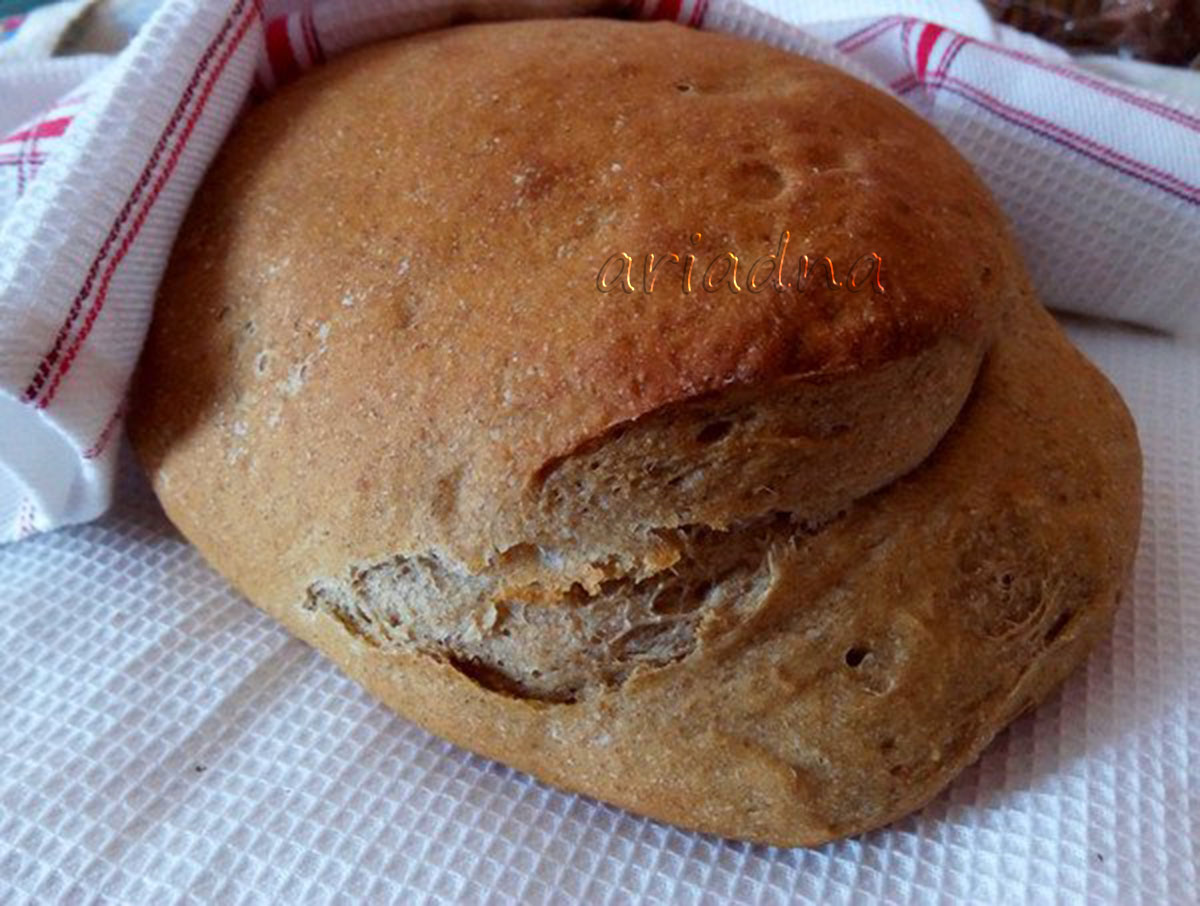
Ukrainian Rye Bread with Kefir (GOST Recipe)
Ingredients
Method
- Activate the yeast: pour 50 ml of warm water over 1 tsp of dry yeast and let it stand for 10-15 minutes.
- Sift the rye and wheat flour into a bowl, add the salt, the warm kefir and the remaining 100 ml of warm water.
- Pour in the activated yeast and knead the dough. Dust in a little extra flour only if needed: the dough should stay tacky, but not glue-like.
- Gather the dough into a ball, place it in a bowl greased with vegetable oil, cover with plastic wrap and leave for 40 minutes.
- Punch the dough down, knead it for about 3 more minutes, then cover again and let it rise for another 40 minutes.
- Punch down and knead once more, shape into a ball, place on a flour-dusted baking sheet, cover with plastic and proof for 1.5 hours.
- Mentally divide the loaf into 4 segments and score one of them. This is mandatory: carbon dioxide escapes through the cut, otherwise the loaf will tear badly.
- Preheat the oven to 200°C (390°F) with an empty tray on the bottom. Put the bread in, pour a cup of boiling water onto the tray and bake with steam for 5 minutes.
- Remove the tray and bake for another 20 minutes at 200-220°C (390-430°F). Cool the loaf on a rack before slicing. Enjoy!
Notes
Secrets of a good rye loaf
- Sticky dough is normal. Add extra flour very sparingly: the dough should stay tacky without turning into glue. Overload it with flour and the crumb comes out dense.
- Kefir and water should be warm - the yeast works faster and the dough rises on schedule.
- Wheat flour: a first-grade (not top-grade) flour is closest to the original GOST flavor; all-purpose flour works too.
- The score is mandatory: carbon dioxide escapes through the cut during baking. Skip it and the crust will tear in a random spot.
- Steam in the first minutes of baking is what makes that crackly crust - don't skip the cup of boiling water.
Storing homemade bread
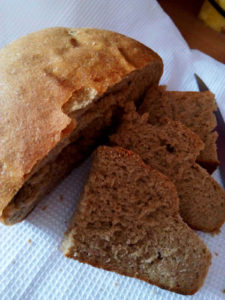
Cool the loaf completely on a rack - slicing warm rye bread squashes the crumb. Store it in a bread box or wrapped in a kitchen towel at room temperature to keep the crust crisp. Sliced bread also freezes well; refresh slices in the toaster as needed.
FAQ
Why bake the bread with steam?
A cup of boiling water poured onto the hot tray fills the oven with steam. For the first 5 minutes it keeps the crust from setting too early: the loaf gets its full rise and the crust turns out thin and crackly. Then the tray comes out and the loaf finishes baking dry.
Why did my loaf tear during baking?
Most likely it wasn't scored. The cut on top is a mandatory step: it lets out the carbon dioxide that forms in the oven. Without it, the pressure rips the crust open in a random place and the loaf loses its shape.
Leave a Reply