
Swiss meringue icing is a snow-white coating for Easter bread and pastries, made from egg whites and sugar warmed over a water bath. It forms beautiful drips, dries quickly and comes out brilliantly white. Essentially it's a slightly under-whipped meringue frosting - I'll show you how to catch exactly the "icing" stage. Try it on your kulich - happy Easter!

Swiss Meringue Icing
Ingredients
Method
- Set up a water bath without letting the water boil. Place a bowl with the egg whites and sugar on top.
- Stirring constantly, dissolve the sugar in the whites. The mixture will reach about 60°C (140°F), but you can skip the thermometer: rub a drop between your fingers - you shouldn't feel any sugar grains.
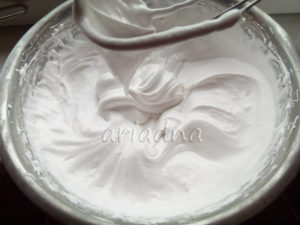
- As soon as the sugar has dissolved, take the bowl off the bath and start whipping. For icing, whip briefly - until smooth, with slow, stretchy ribbons falling from the whisk.
- Add a pinch of citric acid and mix it in - that's it, the icing is ready! Glaze your kulich and pastries.
Notes
Icing or meringue frosting?
This is really a full Swiss meringue frosting recipe. The only difference is whipping time: for icing, whip briefly - just until smooth, when the mass falls off the whisk in slow, stretchy ribbons - so it flows into pretty drips. Whip longer, to stiff, stable peaks, and you get a frosting that holds its shape for swirls and decorating.
Tips
- Equipment: the bowl and whisk must be clean and dry with no trace of grease, and not a drop of yolk in the whites.
- Water bath: don't let the water boil - the whites should warm through, not cook.
- Sugar must dissolve completely: rub a drop of the mixture between your fingers - you shouldn't feel any grains. Temperature-wise that's about 60°C (140°F).
- Citric acid goes in at the very end - a pinch cuts the sweetness and stabilizes the mass.
FAQ
How long does the icing take to dry?
The surface sets quickly, so add sprinkles right after glazing, before the icing skins over. It stabilizes fully within a few hours at room temperature.
Why isn't my icing thickening as I whip?
The usual culprits are grease on the equipment, a drop of yolk in the whites or undissolved sugar. Check that the bowl is clean and keep whipping - the mixture thickens gradually as it whips and cools.
Leave a Reply